


Durga Puja
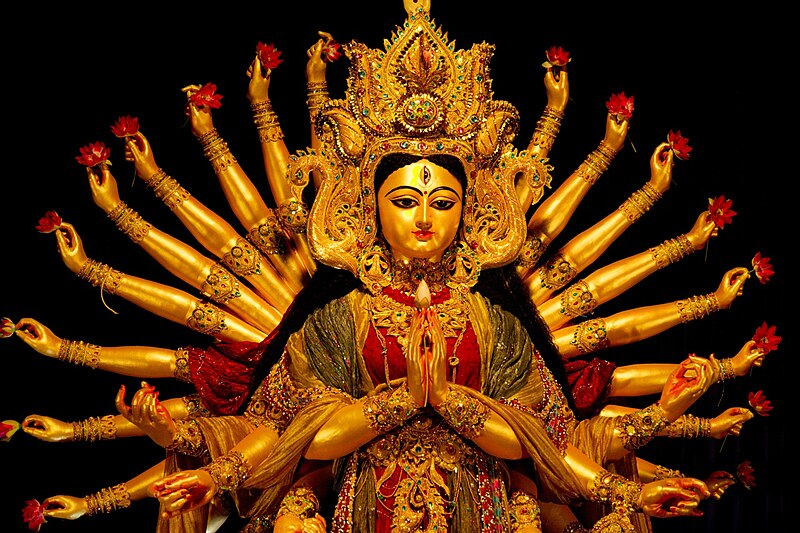
An enthusiastic Hindu holiday celebrated with tremendous enthusiasm and devotion across the Indian subcontinent, particularly in West Bengal, India, and Bangladesh, is known as Durga Puja, also known as Durgotsava or Sharadotsav. This spectacular event honors the goddess Maa Durga and commemorates her victory over the powerful demon ruler Mahishasura. The last five days of the festival—which lasts for five days—are the most important. It usually takes place in the Indian calendar month of Ashwin, which corresponds to September through October in the Gregorian calendar.
The Great Spectacle of Durga Puja
Durga Puja is a spectacular and all-encompassing festival that extraordinarily unites art, culture, spirituality, and community. Millions of people are enthralled by this cultural extravaganza, which is more than just a religious celebration. The ability of Durga Puja to bring individuals from all backgrounds together in a spirit of joy and devotion captures the heart of the festival.

Durga Puja's mythical roots are what give it its primary meaning. According to Hindu mythology, Lord Brahma bestowed the blessing of invincibility upon the demon Mahishasura, leading him to believe that no person or god could ever overcome him. Mahishasura used his newly acquired power to wreak havoc on earth and heaven, upsetting the gods. The gods pooled their forces out of desperation to create Goddess Durga, a representation of celestial femininity and might.
For ten days, Mahishasura was involved in a violent combat with Durga, who had ten arms and weapons that had been given to her by different gods. She finally defeated the demon king on the tenth day, which is celebrated as Vijaya Dashami, signifying the triumph of good over evil. This winning moment is joyfully and enthusiastically commemorated.
Regional Variations in Celebrations

Throughout the Indian subcontinent, regional variations on Durga Puja are observed. Bengali Hindus are most notably known for elevating it to a level of grandeur that is unmatched. The festival in West Bengal is distinguished by intricately made pandals (temporary stages) and artistic goddess idols, frequently motivated by different themes and philosophies. Beyond West Bengal, states like Odisha, Assam, Tripura, Bihar, and Jharkhand also celebrate Durga Puja with equal fervor. Every location lends its distinct flair to the celebrations by incorporating its own traditions and customs. The variety of festivities is evidence of the depth of India's cultural tapestry.
Dussehra and Durga Puja: Vijaya Dashami, the culmination of Durga Puja, has importance beyond the festival itself. Vijaya Dashami is observed as Dussehra in different parts of India, mainly in the north and west. While Dussehra celebrates Lord Rama's victory over the demon king Ravana, Durga Puja principally remembers Goddess Durga's triumph.
The common concept of the victory of good over evil is what ties Durga Puja and Dussehra together. Both celebrations highlight the eventual triumph of virtue in the never-ending conflict between goodness and evil.
Puja Rituals and Traditions
Various rituals and traditions are observed over the course of the five days of Durga Puja. Maa Durga's clay idol, which represents the goddess's heavenly presence, is painstakingly constructed. Scripture readings, aarti (prayer), flower and sweet offerings, and cultural performances like dance and song are also part of the traditions.The immersion of the idol in the holy waters of the Ganges or other rivers on Dashami is one of the most emotional parts of Durga Puja. The Durga Visarjan ritual represents the goddess's ascension back to her heavenly home. With processions, drumming, singing, and dancing in the streets, it is a somber farewell.
Inclusivity and Social Significance
The inclusiveness of Durga Puja is what makes it genuinely remarkable. It welcomes individuals from all walks of life to take part in the festivities and transcends any religious distinctions. Grand pandals are planned and funded by local communities, generating a sense of solidarity and friendship. During Durga Puja, there is a strong sense of community and cultural pride.
Durga Puja also conveys a significant social message. Given that Goddess Durga represents the pinnacle of shakti, or feminine energy, it is a tribute to the fortitude and tenacity of women. The custom of creating the idol from a mixture of cow dung, cow urine, and consecrated soil pays homage to womanhood and acts as a reminder of the difficulties women experience in society.
As a result, Durga Puja is more than just a religious celebration; it is also a lavish show that captures India's rich cultural legacy and spiritual depth. It honors the triumph of good over evil, women's empowerment, and the harmony of various groups. When commitment, creativity, and social harmony all come together during Durga Puja, it creates an unforgettable celebration.