


Dwarkadhish Temple: The Banks of Gomti River
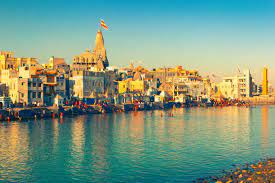
The thriving Gujarati city of Dwarka is home to the Dwarkadhish Temple, a famous shrine to Lord Krishna. For devotees seeking spiritual consolation, this temple is a must-visit pilgrimage destination because of its enormous significance in Hindu mythology. The temple, which has a long history, is not only a place of worship but also a masterpiece of architecture.
Many people may not be aware that Lord Krishna, one of Hinduism's most venerable deities, departed his hometown of Mathura and founded Dwarka as his new realm. It is thought that Dwarka, also known as Dwarkadish, or the "King of Dwarka," was Lord Krishna's palace. Today's Dwarkadhish Temple serves as a reminder of the ancient palace.
Historical Significance:
The first palace was built by Lord Krishna's grandson Vajranabha 5000 years ago, which is when the temple's origins may be found. The temple has been expanded and renovated over the years. The most current building exhibits Chalukyan architecture and finely carved stones. It displays a fusion of architectural forms.
Moksha Dwar and Swarg Dwar: The Swarg Dwar (Gate to Heaven) and the Moksha Dwar (Gate to Liberation) are two distinctive entrances to the Dwarkadhish Temple. Devotees must ascend 56 stairs to pass through the Gate to Heaven and exit through the Gate of Liberation after entering the temple. This represents their spiritual transition away from worldly concerns and toward the desire of redemption.
Also Read : https://www.poojat.com/blogs_details?id=char-dham-yatra
Submergence in the Sea:
According to legend, Lord Krishna founded the ancient Dwarka city, which afterwards met its demise by being buried in the ocean. This tale is consistent with the theory that the city was drowned in a flood when Lord Krishna left. Architectural ruins were recently discovered during underwater dig, offering fascinating proof of the city's past.
The mysterious black idol is a black statue of Lord Krishna that can be found in the Dwarkadhish Temple. This deity is made of limestone and is decorated with silk and diamonds in the Chalkya fashion. For visitors and devotees, it acts as a key center of devotion.
The Dwarkadhish Temple is one of the four revered Char Dhams, which Adi Shankaracharya traveled to in the eighth century. Rameshwaram, Puri, and Badrinath are some of the additional Char Dhams. In Hinduism, each of these locations is of utmost religious significance.
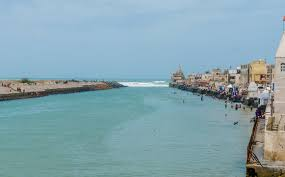
Dwarkadhish Temple's history: The name "Dwarkadhish" means "King of Dwarka." This city, known as Sapta Puri, is one of the seven sacred towns in India that was built by none other than Lord Krishna. The Mahabharata refers to Dwarka as the Dwarka kingdom, which is situated along the banks of the River Gomati.
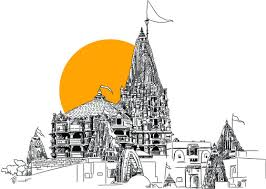
A marvel of architecture, the Dwarkadhish Temple is a magnificent illustration of the art of architecture. The main shrine of the temple, sometimes referred to as Jagat Mandir or Nija Mandir, is a five-story structure supported by 72 elaborately carved pillars. Sandstone pillars that are about 12.19 meters tall are also seen in the temple.
Doors to Salvation and Heaven: The temple has two main entrances - the Moksha Dwar (Door to Salvation) for entry and the SwargaDwar (Door to Heaven) for exit. These entrances lead to 56 steps that descend to the Gomati River, symbolizing the spiritual journey of devotees.
Surrounding Shrines: Besides the main shrine, the Dwarkadhish Temple complex houses two chambers dedicated to Lord Balarama and the grandsons of Lord Krishna, Aniruddha and Pradyumna. Additionally, shrines dedicated to goddesses Radha, Lakshmi, Jambavati, and Satyabhama can be found within the temple premises.
Also Read: https://www.poojat.com/blogs_details?id=dev-diwali
Fascinating Legends:
- Sage Durvasa's curse on Rukmini, leading to her eternal presence in Dwarka.
- The merging of Rajput Princess Meera Bai with the deity of Dwarkadhish Temple.
Festivals Celebrated: The Dwarkadhish Temple comes alive during festivals, with Janmashtami being the most significant celebration, marking Lord Krishna's birth. Other festivals celebrated include Kartik, Annakut Utsav, Rath Yatra, and Deepotsavi, among others.
The Dwarkadhish Temple, with its rich history, architectural splendor, and deep-rooted spirituality, stands as a beacon of faith for millions of devotees. It not only preserves the legacy of Lord Krishna but also serves as a testament to the enduring power of devotion and belief. A visit to this sacred abode promises not only spiritual enlightenment but also a profound connection to the divine.