


Govardhan Puja
Celebrating Lord Krishna's Divine Act
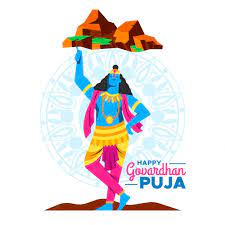
Govardhan Puja, often referred to as Annakut Puja, is a significant Hindu holiday that is joyfully observed. It has a special significance in Hindu mythology and ritual and occurs the day following Diwali, the Festival of Lights. The event is centered on the myth of Lord Krishna raising the Govardhan Mountain to shield the peasants from Lord Indra's anger. We will go into the rituals, history, and cultural significance of Govardhan Puja in this essay.
History and Legend
Govardhan Puja's origins can be found in Lord Krishna's wonderful deeds committed while still a kid in the hamlet of Vrindavan. The Bhagavata Purana says that Lord Krishna questioned his mother Yashoda over the rationale behind the people' adoration of Lord Indra, the rain god. According to Yashoda, people prayed to Lord Indra in order to ensure the fertility of their land and the success of their crops.
But the young Krishna saw things differently. Instead, he said, the people ought to express their thanks to Govardhan Mountain, which had given them the natural riches necessary for their subsistence. The peasants chose to quit worshiping Lord Indra after being persuaded by Krishna's wisdom and charisma to take his advice.
Lord Indra was furious at this defiance and let loose torrential rains on Vrindavan as punishment. The villagers and their cattle were in danger due to the nonstop rain, so they sought shelter under Lord Krishna. With a single finger with unmatched almighty strength, Lord Krishna raised the enormous Govardhan Mountain and kept it there for seven days and nights. The peasants were protected by the mountain, where they sought safety and security.
After some time, Lord Indra understood his error and the truth about Lord Krishna, who was a manifestation of Lord Vishnu. He stopped the downpour after admitting defeat. This extraordinary occurrence marked the start of the Govardhan Puja festival as it is now observed by Hindus. In addition to providing the inhabitants with protection, Lord Krishna's deed of lifting Govardhan Mountain served as a reminder of the value of faith, devotion, and the force of righteousness.
Significance of Govardhan Puja:
As a symbol of the profound relationship of faith, devotion, and protection between Gods and devotees, Govardhan Puja is of utmost significance. The legend of Lord Krishna raising the mountain to provide shelter for countless devotees emphasizes the significance of bhakti (devotion) as the means of attaining enlightenment. By defending the residents of Gokul, Lord Krishna demonstrated how devotion might be used to ask for heavenly protection in trying situations.
The celebration also emphasizes the need of acknowledging our dependency on Mother Nature and the necessity to respect nature's powers. It fosters a spirit of thanksgiving for the blessings the universe and the supernatural have placed upon us.
Story of Govardhan Puja:
Lord Krishna once asked His mother Yashoda why people worshiped Lord Indra, according to the Vishnu Purana. Yashoda clarified that Indra was in charge of bringing the Earth's rain, which supported their way of life. Young Krishna disagreed, though, and advised that since Govardhan Mountain provided them with natural resources for their wellbeing, they should worship it instead. The villagers accepted this suggestion since they revered Krishna's intelligence and might.
Lord Indra was enraged by this choice and gave Varuna Deva, the rain deity, the order to unleash continuous, torrential rain for seven days. In order to survive the flood, the inhabitants of Gokul appealed to Lord Krishna. Krishna asked them without any hesitation to take refuge under Govardhan Hill, which He then lifted with His tiny finger.
When Lord Indra saw that Krishna was a manifestation of Lord Vishnu, he stopped the rain and conceded defeat. Due to this occurrence, Govardhan Puja, a festival honoring Mount Govardhan and the divine protection it gave, was celebrated. Since then, it has developed into a significant destination for Lord Krishna's followers.
How Govardhan Puja is Celebrated: Govardhan Puja is celebrated with a lot of fervor and devotion, especially in Brijbhoomi, the location of Lord Krishna's birth. Lord Krishna and Goddess Radha are given a milk bath, fresh garments, and jewels in the temples of Mathura and Vrindavan. The following are the primary Govardhan Puja rituals:
- Cow dung is first molded into the shape of a hill to symbolize Mount Govardhan by devotees. They embellish it with vibrant flowers and rangoli patterns.
- Parikrama: Devotees circumambulate the cow dung hill while singing Kirtans, a fusion of music, dancing, and devotional songs, as a major component of the event.
- Prayers and Aarti: In order to protect and bring pleasure to their families, devotees give prayers and aarti (rituals involving lamps) to the Govardhan mountain, which serves as a symbol.
- Chappan Bhog: In accordance with tradition, as a show of reverence for Mother Nature, devotees prepare and offer 'Chappan Bhog,' an offering of 56 various foods, including delicacies, sweets, and savories, to the Govardhan mountain.
In Hindu culture, Govardhan Puja, which is observed the day after Diwali, has a special significance. This day honors Lord Krishna and serves as a reminder that good has triumphed over evil. It is observed with various regional customs, but it is especially great in Mathura and Gokul, the birthplace of Lord Krishna. The event places a strong emphasis on the value of devotion to and thankfulness for nature, as well as the protection provided by the divine during difficult times.Govardhan Puja 2023 , which represents the harmony between mankind and divinity, continues to be a testament to the enduring devotion and love for Lord Krishna as devotees give prayers and ask for his blessings for a life free from difficulties. It honors culture, spirituality, and the mystical connection between the divine and its devotees.