


Bhai Dooj
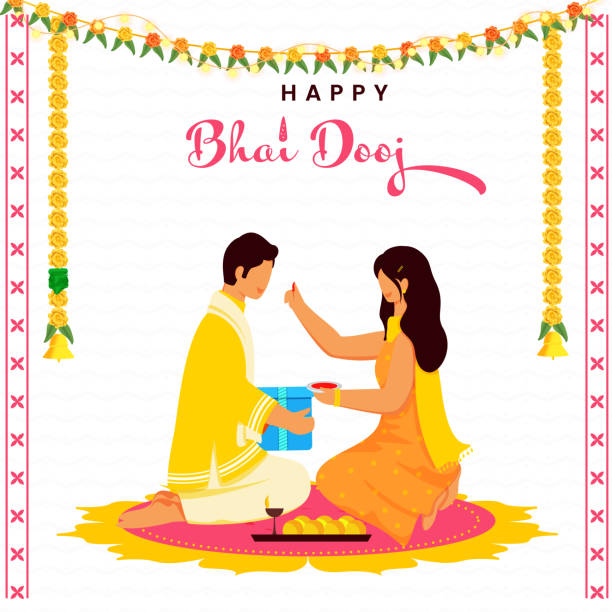
A prominent Hindu holiday observed all over India is called Bhai Dooj, also known as Bhai Phota in Bengal, Bhau Beej in Maharashtra, and Bhai Tika in Nepal. In Hindu culture, this event is extremely significant since it represents the close relationship between brothers and sisters. We will examine the significance, customs, and variants of Bhai Dooj, which is a holiday celebrated all across India.
Significance of Bhai Dooj
The phrases "Bhai" (brother) and "Dooj" (the second day following the new moon) are the source of the term "Bhai Dooj." It has a unique place in the Hindu calendar and occurs the day after Diwali. The event represents the love, concern, and defense that sisters seek for their brothers, while brothers return the favor by giving their sisters blessings and gifts.
Historical Myths Related to Bhai Dooj Bhai Dooj's genesis is frequently linked to two well-known legends:
Lord Krishna and Subhadra: According to one myth, Lord Krishna went to see his sister Subhadra after defeating the demon Narakasura on the day now known as Diwali. She gave him a tilak on his forehead as a warm welcome. The tradition of Bhai Dooj is credited to this act of brotherly affection.
Also Read: https://www.poojat.com/blogs_details?id=karwa-chauth-2023
Yamaraja and Yami : The God of Death Yamaraja is said to have visited his sister Yami (or Yamuna) in another tradition. With flowers, treats, and a tilak on his forehead, Yami welcomed him. Yamaraja reciprocated by giving her a present as a sign of his love. Due to this tale, Bhai Dooj is now recognised in some regions of India as Yama Dwitiya.
Rituals and Traditions: Bhai Dooj is marked by various rituals and traditions that vary across regions but share common elements:
- Worship: After having a bath, devotees offer prayers to gods including Yama, Lord Ganesha, Chitragupta, Yamuna, and Yama's messengers. Chanting mantras is a part of these practices.
- Dry Coconut: Sisters frequently present dry coconut to their brothers as a sign of luck. The legend of Lord Krishna receiving a dried coconut from his sister Subhadra is the source of this custom.
- Decorated Thali: Sisters prepare a beautifully decorated thali (plate) that includes fruits, sandalwood, vermilion, flowers, betel nuts, and sweets.
- Rice Flour Seat: Sisters make a seat of rice flour for their brothers to sit on during the rituals.
- Tilak and Kalava: Sisters apply tilak on their brother's forehead and tie a kalava (sacred thread) on their hands. They also pour water on their brother's palms while reciting holy mantras.
- Aarti: Sisters perform an aarti (ritual of waving a lamp) for their brothers. Spotting a flying kite in the sky during this time is considered a good omen.
- Gift Exchange: After the tilak and aarti, brothers give their sisters gifts and pledge to protect them throughout their lives.
- Bhagni Hasti Bhojanam: Brothers meet their sisters on Bhai Dooj and partake in a custom known as 'Bhagni Hasti Bhojanam,' where sisters prepare food for their brothers. This tradition is believed to have been initiated by Lord Yama.
Variations and Celebrations Across India ; Bhai Dooj is celebrated under different names and customs in various parts of India:
Also Read : https://www.poojat.com/blogs_details?id=diwali-pooja--celebration-2023
Bhai Phota in West Bengal: Bhai Phota is celebrated with great enthusiasm in Kolkata and West Bengal. Sisters fast and perform elaborate rituals, including making sandalwood paste and offering traditional Bengali dishes.
Bhai Tika in Nepal: In Nepal, Bhai Tika is a significant festival, celebrated with prayers dedicated to Yamraj. Sisters apply a seven-colored tika on their brothers' foreheads.
Bhau Beej in Maharashtra: Maharashtra celebrates Bhau Beej, where sisters perform rituals and offer prayers. Brothers, in turn, give gifts to their sisters.
Yama Dwitiya in South India: In some regions of South India, Bhai Dooj is known as Yama Dwitiya. The festival commemorates the meeting of Yamaraja and Yami and involves similar rituals as in other parts of the country.
Holiday and Observance
In India, Bhai Dooj is not a required holiday. In the private sector, it is seen as an elective holiday. The majority of establishments and workplaces are open on Bhai Dooj, giving workers the option of taking the day off or not. The celebration of Bhai Dooj, which is observed on the second day after Diwali, places special emphasis on the enduring affection shared by siblings. This holiday promotes family relationships and honors the love and care that siblings share via rituals, prayers, and the giving and receiving of presents. While Bhai Dooj is celebrated in diverse ways and under different names throughout India, its fundamental purpose—a time for family get-togethers, blessings, and the confirmation of brother love—remains the same.
At Poojat, we provide pooja services at reasonable prices with a staff of knowledgeable pandits, including specialists in various religious practices. Through our website or by downloading the Poojat app from the Play Store, you can quickly reserve your appointment. To meet your spiritual requirements, our pandits are accessible as needed.