


Rameshwaram: The Land of Lord Rama and Lord Shiva
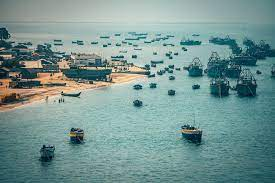
Every Hindu family in India retains a special place in their hearts for Rameshwaram, a location that bears witness to the Hindu epic, the Ramayana. This holy town in Tamil Nadu is not just a popular destination for pilgrims but also a historical treasure trove that has made a significant contribution to India's cultural and spiritual heritage. In this extensive guide, we will explore Rameshwaram's historical, religious, and cultural significance, examining its ties to the Ramayana, its magnificent temples, and the surrounding natural splendour.
Rameshwaram - The Land of Rama Setu:
Originally, Rameshwaram was an island in Tamil Nadu's Gulf of Mannar known as Pamban or Rameshwaram Island. Taking the Pamban Express and traversing the renowned Pamban Bridge—in and of itself an experience—is the only way to get to Rameshwaram.
Among the four Char Dhams of Hinduism—Badrinath in Uttarakhand, Puri in Odisha, and Dwarka in Gujarat—Rameshwaram occupies a special place. These four dhams, each representing a distinct period in Hindu mythology, stand for the East, West, North, and South of India:
- Satyug: Badrinath
- Tretayug Rameshwaram
- Dwapara Yuga Dwarka
- Kalyug, Jagannath Puri
Rameshwaram is dedicated to Lord Shiva, as opposed to the first three dhams, which are to Lord Vishnu. It is thought that Lord Vishnu (Hari) and Lord Shiva (Hara) are best friends forever and are frequently seen together. As a result, locations honouring Lord Shiva frequently have a temple or shrine adjacent honouring Lord Vishnu, and vice versa. The Rama Setu represents the coexistence of Lord Vishnu's incarnation, Rama, in this holy place in the instance of Rameshwaram, which Lord Rama dedicated to Lord Shiva. Lord Rama, a manifestation of Lord Vishnu, lay the very cornerstone of Rameshwaram, the location of the Lord Shiva Jyotirlinga.
Also Read :https://poojat.com/blogs_details?id=char-dham-yatra
History and Foundation of Rameshwaram and the Ramanatha Swamy Temple:According to the epic Ramayana, Lord Rama started construction on the Setu Pul, also known as the Rama Setu or Adam's Bridge, together with his brother Laxman and devoted Lord Hanuman, in order to free his wife Sita from Ravana, the clever Brahmin Demon King of Lanka. After fighting and murdering Ravana, Lord Rama built the Ramanatha Swamy Temple, which is devoted to Lord Shiva, and begged for pardon for his deed. One of India's 12 Jyotirlingas, the Ramanatha Swamy Temple now covers the majority of the Rameshwaram area.
Alauddin Khilji of the Delhi Sultanate, the Chola Empire, Pandyan Princes, the Vijayanagara Empire, and other dynasties ruled over Rameshwaram at various points in history. The RamanathaSwamy Temple and the Sethupathis are connected.
Must-See Rameshwaram Pilgrim Important Sites:
The Rameshwaram temple, often referred to as the Ramanathaswamy temple, is a well-known tourist destination in Rameshwaram in addition to being a site of worship. This revered temple, one of India's twelve Jyotirlinga temples, is devoted to Lord Shiva. Let's examine the history, significance, and architectural wonders of the temple in order to give you a thorough travel guide for seeing this famous location in the southern region of India.
Also Read :https://www.poojat.com/blogs_details?id=dwarkadhish-temple
Location of Rameshwaram Temple:
Rameshwaram, a town famous for its religious significance, is home to a large number of Hindu temples and other significant religious sites. In addition, it has magnificent beaches, which elevate this town to a must-see location.
History of Rameshwaram Temple:
Rameshwaram is intertwined with the historical and spiritual significance of the Ramayana. According to the epic, Lord Rama came to worship Lord Shiva here after feeling guilty for killing Ravana, a Brahmin who was a devoted follower of the god. Nevertheless, as the island had no temples at the time, he ordered Lord Hanuman to fetch a Shiva Lingam from Mount Kailash. When Hanuman's journey was delayed, Sita built a temple from the beach's sand. In addition, the Shiva Lingam was placed close to the temple when Hanuman returned carrying it. The two Lingams housed in the Rameshwaram Temple are the Vishwalingam, borne by Hanuman, and the Ramalingam, made by Sita.
The erection of the temple in the fifteenth century was made possible in part by the efforts of King Udaiyan Sethupati and the Nagoor Vaishyas. Tirumalaya Sethupathi later partitioned the second part of the southern section of the temple in the sixteenth century. There are statues of Tirumala and his son at the temple's entryway. In the 17th century, the current design of the Rameshwaram Temple is said to have been devised by King Kizhavan Sethupathi, who supervised its construction. The Jaffna Raja of the Sethupathi Kingdom also significantly aided in the shrine's expansion.
Best Time to Visit:
The Rameshwaram Temple is open all year round, however July and August are the most ideal months to see its magnificence during the monsoon season. It is best to visit Rameshwaram in the colder months as the summer months may be very hot and muggy. If you want to witness the splendour of Mahashivratri, you should go in February. All things considered, October through March provides pleasant weather for seeing the temple and the city. Early in the morning and late in the evening, during the night ceremony, are the ideal times to visit the temple itself.
Interesting Facts about Rameshwaram Temple:
- It is one of the 275 Paadal Petra Sthalams, and three of the most respected Nayanars (Saivite Saints), Appar, Sundarar, and Thirugnana Sambandar, have exalted it with their songs.
- Among all Hindu temples in India, this one has the longest corridor.
- The Temple is also one of the 12 Jyotirlinga temples, where Shiva is worshipped in the shape of a Jyotirlinga, meaning "pillar of light."
- The temple's interior features extensive halls that span between massive colonnades on platforms more than five feet high.
Festivals Celebrated in Rameshwaram Temple:
Some festivals are observed with great glory and pomp in Rameshwaram, adding to the spiritual vibrancy of the temple. These festivals include:Masi Mahashivaratri: Ten days of celebration stretching from Maha Sashti Krishna Patcham Maasi (February, March) to Mahakrishna Amavasai honour Mahashivaratri, also known as the "Grand Night of Shiva." Rishaba Vaahana Darshan, the Mahasivarathri Abishekam, and ornate chariot processions are held in celebration of the occasion.
Mahalaya Amavasya is a Hindu custom that honours ancestors. It is also referred to as Sarvapitri Amavasya for Pitru Amavasya. During the Mahalaya Amavasya, devotees pay respect to their ancestors at the Agnitheertham sea next to the Ramanathaswamy Temple.
Thai Amavasya: This festival, which is important to Tamil culture, is observed during the Tamil month of Thai (January–February). Special prayers and offerings are made for the peace of the deceased siblings, parents, and other family members for whom it is dedicated. Near Rameshwaram, Devipattinam also hosts Navagraha prayers.
Rameshwaram is more than just a place; it is a holy site that fuses mythology, history, spirituality, and awe-inspiring scenery.