










Tale of Karna: A Tragedy, Sacrifice, and Choices in the Mahabharata
Once upon a time, in the ancient land of Hastinapura, there lived a man named Karna, a figure both revered and condemned, a soul wrapped in the complexities of nobility and bitterness. Karna, a character from the great Indian epic, the Mahabharata, stood as a testament to the intricacies of human nature, a spiritual leader.Karna's journey started with a mysterious birth mystery and an unclear origin. He was discovered floating on the river by Adhiratha, a charioteer, and his wife Radha after being abandoned as a young child. Unaware of their impending royal destiny, the couple showered the child with love. Caring and lovingly raised, Karna's bitterness did not stem from the lack of love he experienced.
Also Read: Do you know about Engagement Puja?
Despite his humble beginnings, Karna's life took an unexpected turn when he rose to become the king of Anga, a position of power and influence. However, bitterness fueled by the constant reminder of his so-called low birth overshadowed all the success and love he received. His loyalty to Duryodhana, the eldest Kaurava prince, and his refusal to let go of the bitterness within him set the stage for a tragic tale.
Karna's interactions with the outside world were a reflection of his inner turmoil. He was renowned for his honor, magnanimity, and remarkable fighting prowess. However, his bitterness poisoned these attributes, causing him to make poor decisions. Even though he was aware of the moral consequences of his actions, his loyalty to Duryodhana demonstrated the depth of his internal conflict.
Also Read: A day to celebrate bond of brother & sister Bhai Dooj
Tragic events and selflessness emerged as recurrent themes in Karna's life as he navigated its many turns. His life was a sequence of highs and lows, where every act of selflessness was eclipsed by the next untimely development. The story took a profound turn when Karna's real parents were revealed by Lord Krishna, the divine charioteer: Kunti, the mother of the Pandavas, was his birth mother, and Surya.
Without realizing that the five Pandavas were actually his half-brothers, Karna had harbored resentment toward them for a lifetime. This realization devastated him. He had become cruel and nasty because of his allegiance to Duryodhana and the weight of his own resentment. His struggle to come to terms with the fact that he had deliberately worked against his own blood reached a breaking point.
Also Read:Sunderkand Path in Hindu Tradition
Through the passages of time, the question of whether Karna was a hero or a villain echoed. Drawing lessons from the Mahabharata, Sadhguru emphasized that existence itself does not judge what is good or bad. People and society assign labels and create categories. Karna's life was a canvas depicting the results of one's decisions; it was painted with tones of bitterness and nobility.
Karna's generosity, as evidenced by his oath to never send anyone empty-handed from his court, became both his strength and downfall. Indra, the king of gods, recognizing Karna's invincibility with his divine armor, sought to weaken him. In a guise, he approached Karna during his mid-day worship, a time when Karna could not refuse a Brahmin's request. Karna, true to his nature, selflessly gave away his armor, unknowingly paving the way for his own vulnerability.
Also Read: Dwarkadhish Temple: The Banks of Gomti River
On the Kurukshetra battlefield, the narrative peaked. As the chief commander of the Kaurava army, Karna bravely and gracefully accepted his fate. He was restrained in his bravery during his encounters with his brothers, the Pandavas, by his vow to Kunti not to kill anyone but Arjuna.
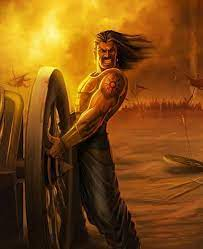
The seventeenth day of the fight marked the turning point. Equipped with the formidable Vijaya bow, Karna confronted Arjuna, his enduring foe. Their fight was so fierce that it reverberated throughout time. Without any divine weapons, Karna used his own skill to create a plan. The curse that had been placed upon Karna was fulfilled when his chariot wheel became stuck, marking a significant turning point.
Krishna pleaded with Arjuna not to be lenient, reminding him of Karna's ruthless deed against his son Abhimanyu. Karna, having lost the ability to use the Brahmastra and was having difficulty with the wheel, had to face his last moments. With Krishna's help, Arjuna unleashed the deadly Anjalika weapon, beheading the formidable warrior.
The complexities of Karna's life were revealed by his death. His birth mother, Kunti, told her sons the truth about his origins, and the Pandavas lamented the passing of their misinterpreted sibling. The oldest Pandava, Yudhisthira, was especially affected and, in a fit of wrath, cursed all women, declaring that they would never be able to keep a secret.
Karna's life ultimately resembled a tapestry with strands of tragedy, selflessness, and the results of decisions made. Scholars and spiritual leaders disagree about his legacy, but it nevertheless serves as a reminder of the complexity of human nature and the ongoing conflict between resentment and nobility found in the epic Mahabharata.


